
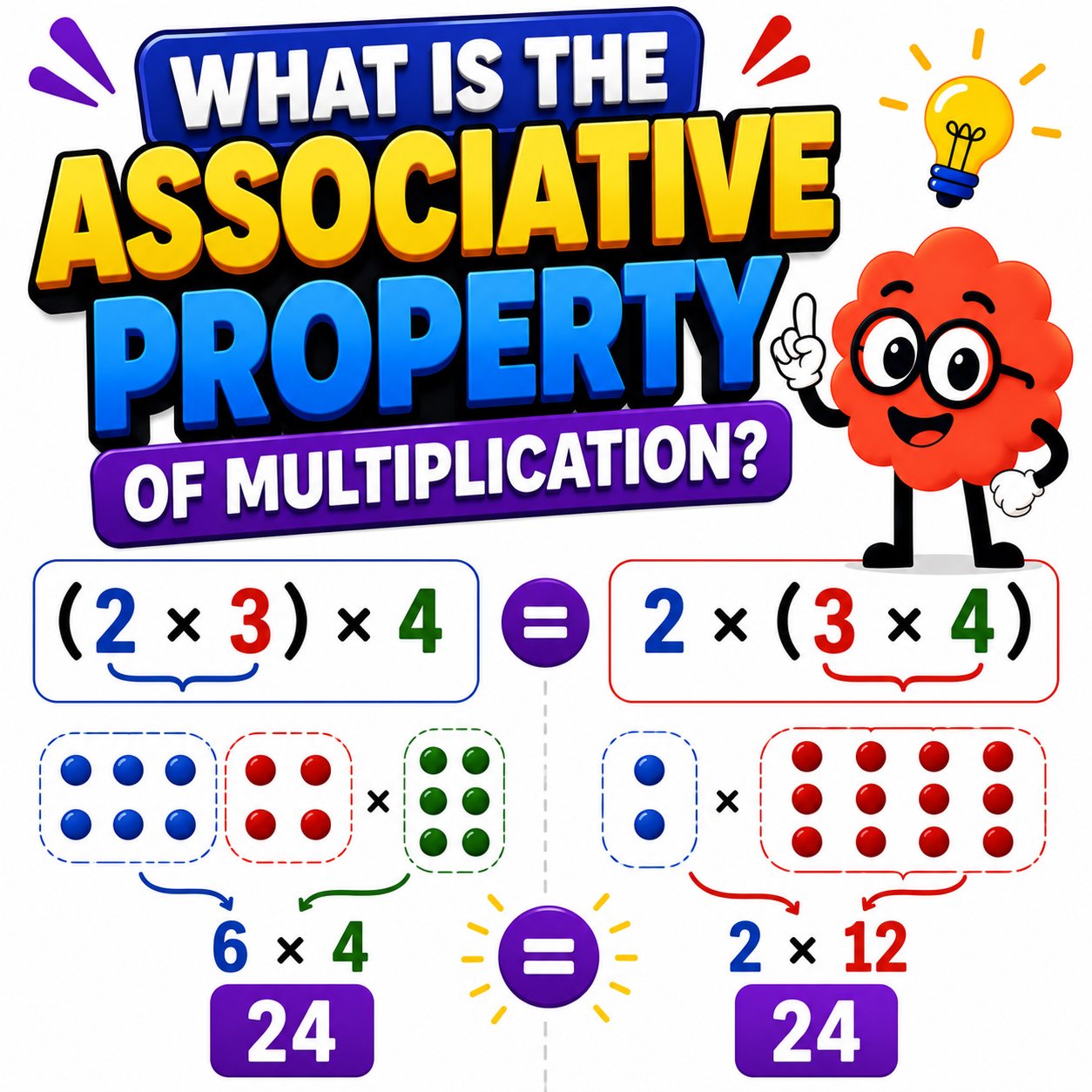
The associative property of multiplication says that when three or more numbers are multiplied, it doesn't matter how they're grouped. The answer stays the same. For example, (2 x 3) x 4 gives the same result as 2 x (3 x 4): both equal 24.
Like most math “properties,” this one sounds more complicated than it actually is. Here's what it means, how it looks in practice, and how it's different from the commutative property, since the two get confused constantly.
What Is the Associative Property of Multiplication? (Quick Answer)
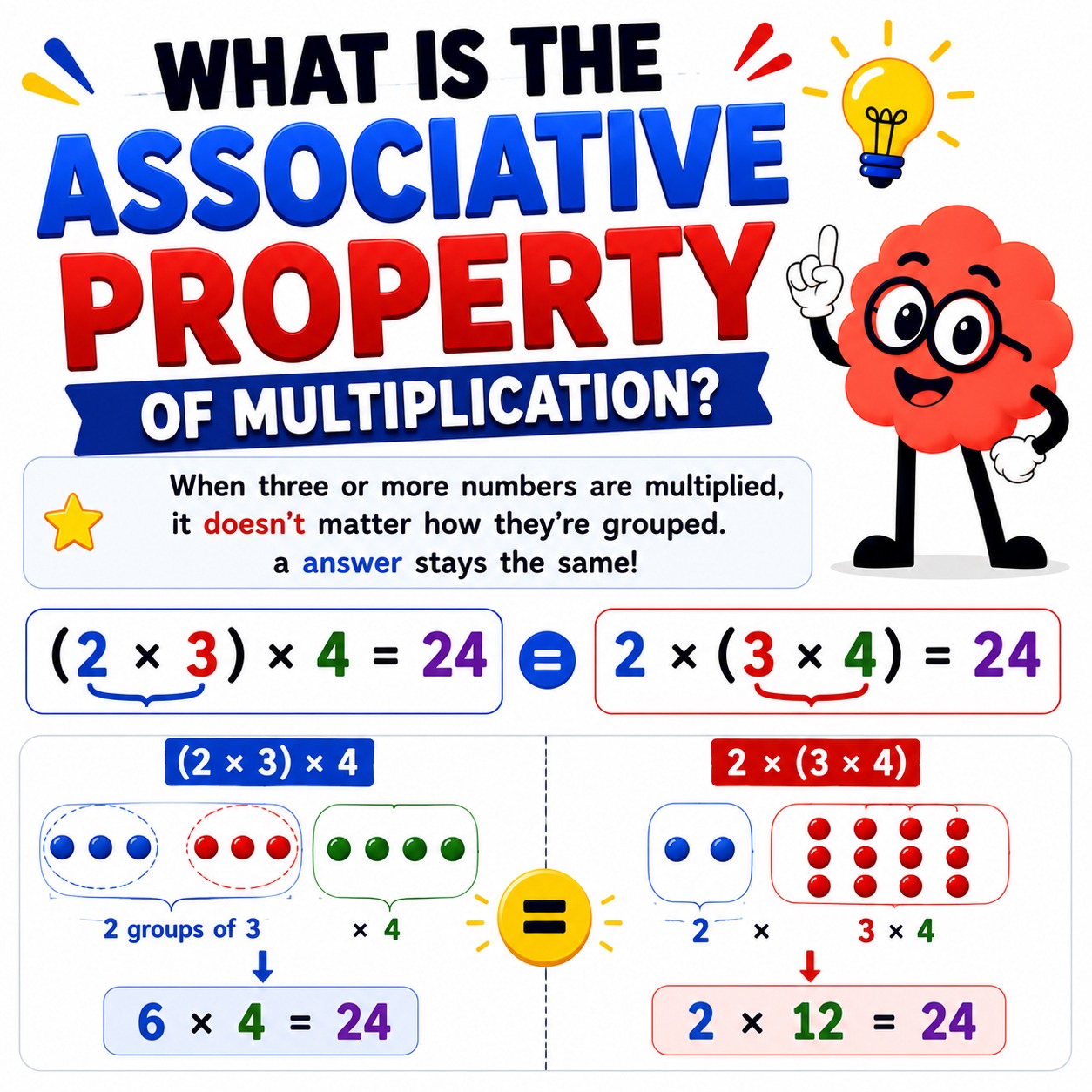
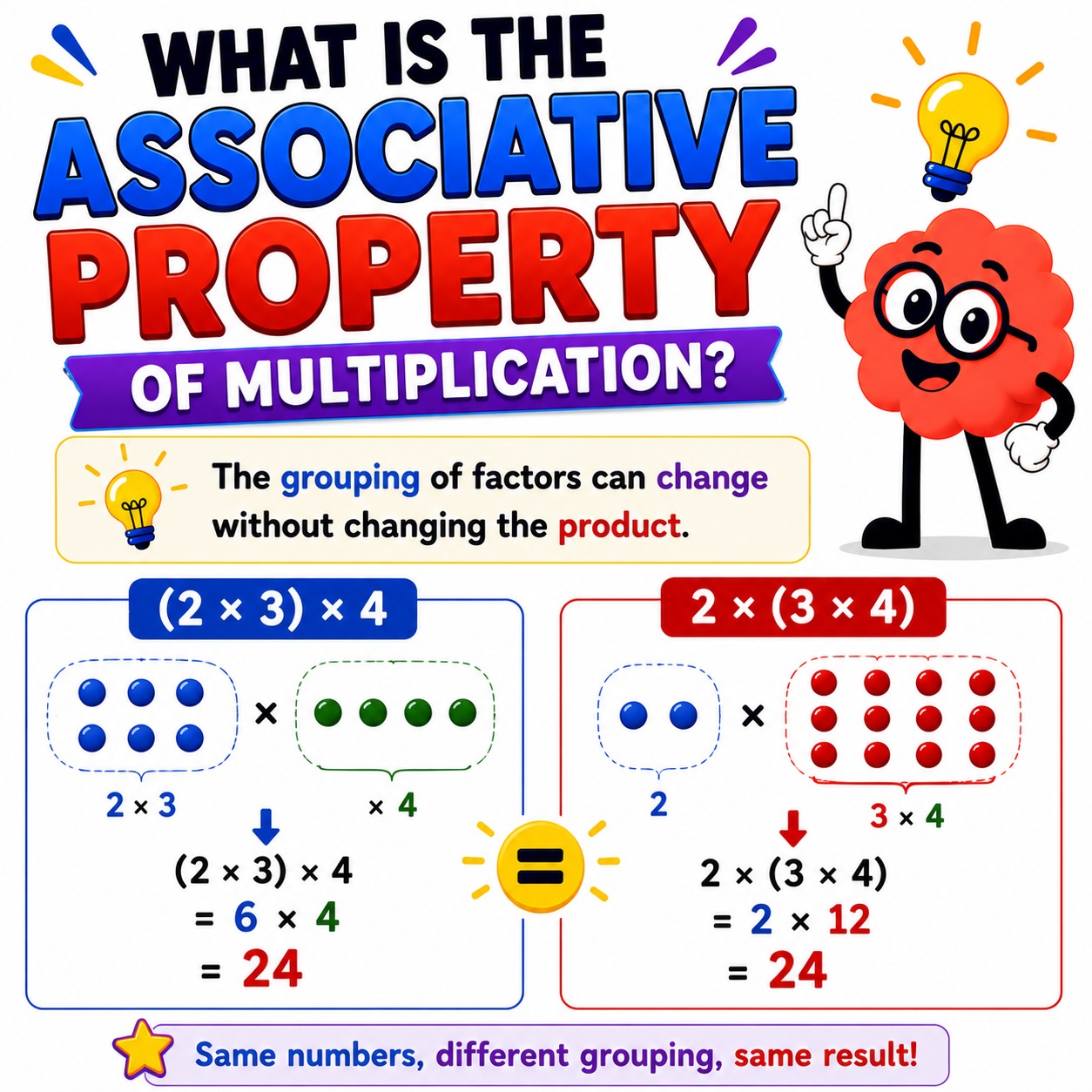
So what is associative property of multiplication, in plain terms? It means the grouping of factors can change without changing the product. Formally: (a x b) x c = a x (b x c). The word “associative” refers to how the numbers “associate,” or group together, not the order they appear in.
Seeing It in Action: (2 x 3) x 4 = 2 x (3 x 4)
Take 2, 3, and 4. Grouped one way: (2 x 3) x 4 = 6 x 4 = 24. Grouped the other way: 2 x (3 x 4) = 2 x 12 = 24. Same three numbers, same final answer, just a different pair multiplied first. That's the associative property of multiplication in action.
Associative vs. Commutative: What's the Difference?
These two are easy to mix up, but they answer different questions. The associative property of multiplication is about grouping three or more numbers with parentheses. The commutative property of multiplication is about order, and it only needs two numbers: a x b = b x a. Grouping changes where the parentheses go. Order changes which number comes first. They often work together but they're not the same rule.
Why Grouping Differently Can Make Mental Math Easier
This property is genuinely useful for mental math, not just a rule to memorize. Multiplying 4 x 5 x 3 is easier as 4 x (5 x 3) = 4 x 15 = 60 than working strictly left to right. Picking the friendliest pair to multiply first, then finishing with the third number, is exactly what the associative property of multiplication allows. It pairs well with the distributive property, which offers a similar kind of flexibility for breaking numbers apart.
Does This Work for Subtraction or Division? (No, Here's Why)
No. Subtraction and division both depend on grouping, so changing it changes the answer. (10 - 4) - 2 = 4, but 10 - (4 - 2) = 8. Same numbers, different groupings, different answers. Multiplication and addition are associative. Subtraction and division are not.
What Grade Is This Taught?
The associative property of multiplication is typically introduced in 3rd grade, right alongside the broader idea of what is multiplication. It's usually taught together with the commutative and distributive properties as a set of mental math tools used throughout upper elementary school.
Common Mistakes
The most common mistake is confusing this with the commutative property, since both involve rearranging a multiplication problem. Another is assuming grouping works the same way for subtraction and division. It doesn't. A third is forgetting that the associative property of multiplication needs at least three numbers, since grouping two numbers with parentheses doesn't actually change anything.
Key Takeaways
- The associative property of multiplication means (a x b) x c = a x (b x c). Grouping doesn't change the answer.
- It applies to three or more numbers, not two.
- It's different from the commutative property, which is about order, not grouping.
- Picking the easiest pair to multiply first makes mental math faster.
- Subtraction and division don't follow this rule.
Frequently Asked Questions
What is an example of the associative property of multiplication?
(2 x 3) x 4 = 2 x (3 x 4). Both sides equal 24, no matter which pair gets multiplied first.
What is the difference between the commutative and associative properties?
Commutative is about order: a x b = b x a. Associative is about grouping three or more numbers: (a x b) x c = a x (b x c). That distinction is usually the real answer when someone asks what is associative property of multiplication.
What is the associative property of 2, 3, 4?
(2 x 3) x 4 and 2 x (3 x 4) both equal 24. It's the standard example used to show how the associative property of multiplication works.
Does the associative property of multiplication work with more than three numbers?
Yes. Any string of numbers being multiplied can be grouped in different ways without changing the final product.
The associative property of multiplication is one of those rules that feels abstract on paper but shows up constantly in mental math. Once grouping numbers freely feels natural, multiplying longer strings of numbers gets noticeably faster.
Book a free assessment today and explore our Grade 3 math program.